Tuesday, November 15, 2011

At the End of the Day--My Top 12 Writing Tips

I can't believe I haven't blogged in over a month--disgraceful!  My only excuse is I am so consumed with Overtaken pre-pub I barely have time to eat or sleep, let alone blog.  But I've certainly missed you all. It's also been difficult for me to think of a blog-worthy topic right now, but since this is primarily a blog about writing, and we're in the middle of Nanowrimo (which I am NOT participating in this year, thank goodness) I thought I'd share some of my fave writing tips.  At the end of the day, when all is said and done, these are the ones that have always served me the best:

1.  Go for pages rather than word counts.  Yes, I know Nanowrimo is all about hitting that 50,000 word goal, but if you set yourself a number of pages per day first, you'll find you can surpass that final number, and ahead of time too,  During the rest of the year, watching your pages add up is, fo me, far more satisfying than stressing over a bloated word count.

2.  Break your writing sessions up into several sittings per day.  It's a bad idea to work on anything for longer than an hour without a break.  Writing is no exception.  Schedule your writing session for various times during the day (or night).  You'll be more productive.

3.  And break those sessions up too!  For instance, give yourself 15 minutes to freewrite, then stand up and get a drink of water.  Then take 15 minutes to write some more.  Stop, read a few magazine pages.  Then go for, say, 30 minutes...have lunch.  You get the picture.

4.  Write your first draft from start to finish--without editing.  While you're writing the first or discovery draft, try not to look back at your previous pages unless it's for something like a quick reminder of a character's name or the last thing he or she said when you put your pen down.

5.  Write your last scene first.  I've always thought it's important to know where I want my story to go.  I consider this last scene or page the equivalent of a life raft, something to swim toward when the going gets rough.

6.  Always diagram a "W" goal structure even if you have no other plot or outline, starting with:  What does my main character want, and why can't she/or he have it?   (For more information on the full "W" and what exactly it is, check out The Essential Guide for New Writers, From Idea to Finished Manuscript, currently on super sale at valeriestorey.com.)

7.  Write longhand whenever you can.  In my workshops I've always taught:  ideas come through our heads, pass through our hearts, and are expressed through our hands--with a brush, pen or pencil, or even a twig.  There's something very honest and fresh when we write by hand.  I also think it's much easier and more comfortable than any other method.

8.  Print out every draft.  Edit and rewrite from a paper version of your manuscript, rather than relying on your computer screen to catch errors or ways to improve and polish your writing.  The difference between the two formats and what you can find "wrong" is astonishing.

9.  Collage your feelings, scenes, chapters, characters, and book covers, and keep them all together in your manuscript binder.  For more information on writing with magazine cut-outs, just click here.

10.  Write with a friend.  Create a writing group that's based on productivity rather than critique.  Have assignments and goals to accomplish between meetings.

11.  Always be aware of your genre and where you want your book to be in the bookstore--both online and bricks-and-mortar.  This is especially helpful for writing query letters and synopses, but it's also a good way to keep your writing on track.  Know your genre and how you fit into it, or how and why your manuscript is taking that genre in a new direction.

12.  Be playful.  Use as many prompts, tricks, what-ifs as you can throughout the writing process.  Be willing to change your story when it tells you to.  Be outrageous, be daring, "go for the jugular," as Natalie Goldberg always says, and do your best to enjoy the journey through all its many stages.

So there we are!  Happy Nanowrimo, everybody.  Now back to our writing.

Tip of the Day:  Let's make it a baker's dozen and throw in a 13th tip:  Don't be afraid of your creativity.  If you're fearful of "what will people think," use a pseudonym.  If you're afraid of failure, tell yourself it's all pretend, anyway, and much more fun than washing the floor.  Good luck!

Wednesday, October 12, 2011

Overtaken Update (and Another Blog Award--Yay!)


Wow--the last few weeks have been hectic, sending me far away from my blog, my usual social media sites, my life...  Proofing Overtaken has been intense to say the least.  Scary, nerve-racking, and insomnia-producing would be good descriptions of the process, too.

But during all this sturm und drung, there have also been some bright spots along the way, starting with The New Mexico Women Author's Book Festival in Santa Fe where I presented a workshop on making book trailers (yes, it will be a future blog post!) and where I signed copies of Better Than Perfect as well as The Essential Guide for New Writers

And,

I received another blog award--this time from the wonderful "writer of creative nonfiction, poetry, and musings" Chris Galvin Thank you, Chris!  I really appreciate you thinking of me.

This is the second time I've been given the Versatile Blogger Award, and it's an award I love.  Versatility is the soul of creativity and I'm grateful that my friends acknowledge how much I enjoy blogging and sharing new ideas with you.

The requirements that come with the award are that I share it with 15 other bloggers, notify them that they have received the award, and that I then list 7 things about myself. 

Because 15 is a rather hefty number, I'm going to break it down over the weeks so that I can include not only some of my favorite blogs, but new ones that I discover along the way.  This week I'm going to start with two:  


Congratulations to these lovely and multi-talented bloggers, people who truly epitomize what it means to be a  "versatile blogger." 

As for the "7 things about me," I thought for a change of pace I would list 7 things about Overtaken.  These are:
  1. The story is set in London and a privately-owned Greek island.
  2. My main character is named Sara Elliott and she is an artist.
  3. I started writing the book as an exercise in a workshop at the International Women's Writing Guild summer conference in Saratoga Springs.  Pages 15-16 of the finished manuscript were first written in a morning workshop presented by poet and author of Gifted Grownups, Mary Lou Streznewski, and the last page was written in a class I took later that same afternoon, led by Emily Hanlon, author of Petersburg and The Art of Fiction Writing.  When I got home from the conference I was too busy with other projects to even look through my notebook.
  4. But when I did start thinking about turning those exercises into a full draft, I entered the first 50 pages into the Gothic Romance Authors Haunted Hearts contest, the first contest I'd ever entered, and I won 3rd place!
  5. Overtaken is the most unusual book I've ever written, a modern literary gothic, part fairy tale, part metaphysical search.
  6. It was also the first book I'd ever used my "magazine cut-out" collaging techniques to help develop my plot, setting, and characters.
  7. I wrote my entire first draft and all extra material long hand.  I then transcribed it onto paper using my trusty Panasonic KXE-700M typewriter, and then finally transcribed it again onto my computer.  Writing long hand and using my typewriter were definitely my two favorite stages.
So there we are!  Just a few more weeks and with any luck Overtaken will be published at the end of the month.  Whew.  Now back to my proofing.

Tip of the Day:  It was fun for me to make a list of "7 things about Overtaken," making me think it would be a good idea to do something similar for my other books, including those already published and those still in the WIP stage.  Not only is it a good jumpstart to future marketing, but it helped to clarify my thinking for those times when I'm asked, "Where do you get your ideas?" or "What is your book about?" 

In the meantime, do visit the blogs I've mentioned here and say "Hi!" to their writers.  You'll be glad you did.

Wednesday, September 14, 2011

Overtaken: We Have a Proof!


OVERTAKEN:  The proof is here at last, complete with cover art which I absolutely could not resist sharing with you all.  I'm thrilled with the way it turned out, and I'm just as pleased with the look of the interior pages too.

So armed with my trusty red pen, mini post-its, and a brand new legal pad, I am now taking the next few days off to go through the entire book line by line, word by word.  Again (!).  Oh, well.  As they say, "the proof is in the pudding" and my choice is pistachio.  Should keep me sustained until publication day.  Wish me luck!

Tip of the Day:  Keep writing--keep drawing--keep going.  There were days--weeks and months--when I thought I would never be holding a copy of this book in my hands.  How silly was that?  If I could give you just one word that means everything to me, it would be:  Persevere.  It's the only way to accomplish anything.  See you soon. 

Friday, September 2, 2011

Poetry Reading

My first poetry reading!  In public!

Last night I had the privilege of being part of the Quinto Sol/Sexto Sol, Dissolution and Creation opening held at the South Broadway Cultural Center here in Albuquerque. 

The event was organized by Vistas Latinas, and was designed to be: "An art exhibition that will explore the meaning of the year 2012.  By understanding our past, we can create the present, and envision the future."   It was an amazing night:  incredible visual art; a mysterious piece of performance art, music from young musicians (very young!), good food, and of course, poetry reading.  Adding to the fun was the welcome addition of a dramatic rainstorm, much-needed after a summer of severe drought. 

The idea of including poetry came from one of the exhibit's curators and exhibiting artists, Elaine Soto.  And when she invited me to participate along with six other poets (as in, ahem, real poets), I was nervous.  I'm a prose writer; when I write poetry it's for fun, journaling, experimentation.  I'd never tried writing a poem for an event, and I'd certainly never read a poem in front of an audience larger than my writer's group.  It was a challenge for sure, especially given the large theme of the Mayan Calendar and (maybe) the end of the world. 

In the end I decided to take the theme into a more personal perspective, hoping that by doing so it could also translate into a universal metaphor of life and death, "dissolution and creation."  I wrote:

Waiting for an Orchid to Bloom

Can take days, months; so many other
things can happen while that bud sits
as tight and full as a little bound foot.

Anticipating my own rebirth,
I watch the turning on the stalk,
A secret thing preparing its rotation, sudden and fetal.
Only orchids can make this sharp turning.
Only orchids swerve in answer to the pull of time.

The opening—if ever it comes—will be sudden and unexpected.
My own calendar means nothing to this
green creature poised and placed to follow
the unbreakable rules of feng shui.
My wealth corner is its doom.
It has no choice to leave for better light or conditions.
Instead, it stays where I insist it bring me
luck, or happiness, things it will never understand,
things it answers with stubbornness, shyness, and grief.
Only last week two buds died of blast,
withered and shrinking beneath my impatient
testing and tapping for soundness.

I held the fallen heads between my hands, an ugly tobacco yellow
staining and replacing the creamy greenness
of their first appearance.
Stillborn and hollow, whatever life they had to offer fled.
I wept.

Now all my future is bound and cast into one
last bundle, one final bud,
that forbidden package sealed and silent,
speaking only to itself.
I wait to weep again.

Tip of the Day:  Writing to a pre-set theme can be intimidating.  I'm thinking about all those times I've looked through both prose and poetry calls for contests and magazine submissions, and thought, "What would I write??"  However, after this particular exercise, I learned that the best way to tackle the project is to start small, bring it home, and not try to cover absolutely everything that comes to mind.  Thanks for reading--have a great Labor Day Weekend!


Tuesday, August 23, 2011

A Commonplace Book of My Own

Hello, everyone!  The last couple of weeks have been hectic for Dava Books.  Preparing Overtaken for a September 30 publication date is both nerve wracking and an occasion for celebration. 

After umpteen months of writing, editing, and endless rewriting, it's going to feel very odd to not have the Overtaken manuscript in my life anymore.  Every time I finish and release a book I go through a mini-version of empty-nest syndrome; a good reason to have a fun project ready and waiting to fill the void.  This time it's going to be starting my commonplace book, as well as doodling on some screenplay ideas. 

Over the weekend I used my store credit at a local indie bookstore, Page One, to buy this luscious journal for my first attempt at commonplacing.  I think it's the perfect choice:  a magnetic fold-over closure to keep the pages tidy; slim enough to fit in a tote or large handbag; a full-size cardboard pocket fitted to the inside back cover for slipping in cards and gallery notes; smooth, creamy, top quality paper.  It also just looks so inspiring.  The cover's old-world patina already has an antique feel that makes me think of magic, mysteries, and museums.  I can't wait to start filling it up!


On the inside:


However, as lovely as this journal is to me, I'm being strict with myself and refusing to even write a single line until Overtaken is in print.  I shouldn't even have taken these pics!  I've got a zillion things to do today, finalizing the Overtaken trailer amongst them, but I couldn't resist the chance to share my dreams with you.  Because isn't dreaming what it's all about anyway?

Tip of the Day:  Whatever creative project you're working on right now, be sure to reward yourself along the way for a job well done.  Don't just wait for the "end" to celebrate.  Reaching your weekly page goal quota, filling up a sketchbook, or writing "morning pages" for a month can all be reasons to treat yourself to something nice.  In the meantime, wishing you all a happy and creative day!

Tuesday, August 9, 2011

A Commonplace Book of One's Own

For many years I've been intrigued with the idea of the "commonplace book," a type of journal- or notebook-keeping system that dates back to the seventeenth century.  Two of my favorite examples from more modern times include E.M. Forster's Commonplace Book and A Writer's Commonplace Book by Rosemary Friedman. 

Basically the idea behind creating a commonplace book is to have a written record of meaningful or important instructions and reminders that you would not ordinarily find in any one place.  The two books I've mentioned above concentrate on the art of writing, but I've read others that are a wonderful hodge-podge of obscure and fascinating factoids, from graveyard inscriptions to medieval recipes for swan pie. 

If you're like me and have kept any kind of journal at all, you've probably unwittingly been creating a kind of commonplace book without even knowing it.  When I re-read many of my journals I'm always discovering notes on recommended book titles or a writing friend's best advice on how to create a scene or write a pantoum.  One of the reasons I've been reluctant to part with my journals is the fact that if I tossed everything out I'd be losing several volumes-worth of good advice.  Finding that advice when I need it, however, can be a major headache, especially when most of it is hiding between old morning pages, drafts for long-ago published novels and poems, and all the rest of the usual stuff that goes into a journal.  So here's my plan for separating the sheep from the goats:  Create a dedicated commonplace book! 

This first attempt, I've decided, is going to center around an art theme.  Some of the things I want to include are:
  • Information on new art supplies—with pages that give me a place to try them, record how to use them, or paste in the manufacturers’ suggestions and instructions.
  • Artistic quotes and phrases I like.
  • Colors and palettes I want to try. 
  • Lines of poetry about art.
  • Other people’s art—whether from magazines, exhibition catalogs, or postcards.
  • Museum/gallery notes and flyers. 
  • Wish lists of supplies. 
  • Lists of ideas and themes to work on in the future. 
  • Art-related books I'd like to read or buy. 
  • Notes from these same books. 
  • Notes from workshops I've either attended in the past, or will be attending later on.
  • Business and marketing tips and resources for artists.
A commonplace book is an excellent item to turn into a gift for someone special, either for now, or to be passed down through the generations.  You can include anything you want--there are no rules.  For instance, you might want to insert family recipes, favorite poems, or vintage photographs.  I'm defintely looking forward to starting my own book and seeing how it evolves.  Recently I received some gift cards from local bookstores, so there's no excuse for not finding the perfect journal to be my starting point.  Once I begin, I'll be sure to post some pictures to let you share in my progress.

Tip of the Day:  What subject interests you enough to start a commonplace book?  Keep in mind that you can mix subjects, too, sometimes this makes the books even more interesting to read.  If you're stuck, brainstorm a list of topics, e.g., genealogy, the paranormal, sewing, French cuisine.  Who knows--you might want to start and keep half a dozen!

Thursday, August 4, 2011

Life Lessons From a Drawing Class

On Tuesday night my experimental drawing class came to an end.  It was both sad (no more Tuesday night socializing with like-minded new friends) and liberating:  "Okay, you've learned all about mixed media--now go make art!  You can do it!"

Besides acquiring a whole arena of fresh knowledge regarding techniques and materials (I absolutely fell in love with Pan Pastels and Stonehenge paper) I feel I learned several important lessons that can apply not only to drawing and painting, but to the way we approach any creative pursuit--including the art of living!  Here's my top twelve:
  1. Be patient.  There is no magic button.  Life—and especially creativity—is not a foot race.  Take your time; trust that the process will work--it will.  Eventually!
  2. Work on several pieces at once.  While you’re waiting and deciding about how to continue or enhance a piece, start working on something new.  Ideas will seed each other, bringing inspiration and giving you a strong sense of productivity.
  3. Start.  Stop.  Wait.  Start.  Then stop again.  It’s a good idea to break your work into segments.  Once you’ve added a new element to a piece, let it sit for awhile before you rush to the next “improvement.”
  4. The marks we make clue us into our natural direction.  Because I’m a writer, I tend to love line.  Cross-hatching with a sharp pencil, swirls of charcoal depicting hair and fur, I enjoy elegant mark making.  A knitter in the class gave her work the smooth, even order of a “knit, purl” pattern.  Another woman, a beader, worked with circles.  Art reveals our natural rhythms and preferences.  Go with them. 
  5. Instead of saying you don't like a piece, say "it's not finished."  Which is another way of saying “don’t give up.”  It’s a journey—not every stop along the way is going to be "oh, wow!"
  6. Put your work on the wall and live with it for a while.  Along with #1 and #3, let everything you do sit for a while and breathe.  Ask the piece what it needs (if anything).  What does it want to say?  Listen and don't rush to judgment or completion.
  7. Your work is sacred, but it's not precious.  Honor the process, but don’t be afraid of letting the work go when it's time.  Most pieces and drafts are simply stepping stones and tools to guide you toward a more important work or truth.  Once they’ve served their purpose, thank them and move on.
  8. Just make a mark.  Start.  With anything.  A red slash.  A green dot. A woman in a shopping mall.  Add a feather.  A leaf.  A crying baby.  Find the story.  One idea really does lead to another.
  9. Be comfortable with awkwardness.  Appreciate the adolescent in your artwork or manuscript:  nose and ears too big for the face; gangly arms and legs, excruciating shyness—we were all thirteen once upon a time! And guess what? We all grew into swans and flamingos and eagles in spite of thinking we’d never be anything more than frozen turkeys.  Recognize your work will go through the exact same life stages we all do—every one of them special and engaging in its own right.
  10. Take risks.  You’ll never know unless you try.  Throw that paint! Put a poem in Chapter Seventeen!  Write from the dog’s point of view!
  11. You can't ruin anything.  There isn’t a single piece of art or writing that can’t be fixed.  Even the worst "accident" (torn paper, spilled ink, smeared paint, the dog’s POV didn’t work) can be turned into the starting point for a new—and often more exciting—direction.
  12. There's plenty more where this came from.  We are all creative beings with limitless access to a universe of possibility.  Never fear running dry, or feeling you have to hoard your ideas and skills for “the real thing” (whatever that is).  The universe is simply bursting with grand ideas, and all of them are yours for the taking.  Give everything you work on your total best, your full attention, your most interesting angle—the well will be refilled long before you could ever possibly reach “empty.” 
Tip of the Day:  As the people around me can testify, I did a lot of complaining during the early stages of this particular class:  "It's nutty!  Everything I do looks like dog vomit!"  It took me nearly all eight weeks of class time to believe that any of the above lessons were true, let alone usable.  In the end I finally threw caution to the wind.  Here's the result:

Keep Playing!!

Tuesday, July 26, 2011

Making a List--and Checking it Twice!

The last few weeks have been incredibly hectic as I prepare Overtaken for publication.  Each time I bring a book to this last stage of the journey I'm reminded how very difficult the work really is.  Checking for word repetition, making sure the timeline is consistent, assuring myself that I really have gone as far as I can go with the editing--it's a lot to do.  And if I didn't have a series of lists to follow, I shudder to think how far behind I'd be right now.

I love writing lists.  As you've probably noticed by now, most of my blog posts are comprised of, or include, one or more lists somewhere in the text.  I think it's the organization I find so compelling, my brain just seems to thrive on list-making.  It's also about the only way I can multi-task.  Keeping lists close by can remind me where I am in my manuscript, how many times my heroine has worn a pink dress, and what kind of pictures I want to feature in my book trailer.

That said, I also have to admit "to do" lists are my least favorite.  I often find myself abandoning them halfway through, that is if I even get that far.  A much better system for me is to make a "have done" list, especially as a journaling theme.  The other kinds of lists I enjoy making are ones I can refer to many times over and that can even be expanded.  For instance:
  • Repetitive word lists--things to avoid, e.g., buzz words such as "just," "only," "nice."
  • Synonyms:  how can I take my buzz words to a new level?
  • Interesting, active verbs:  same as above.
  • Interesting scenes to write.
  • Tips and checklists for making a scene "work."
  • Character names:  the more variety, the better.
  • Unusual professions--go for the weird.
  • Little known locations, cultures, and customs.
  • Colors, e.g. rather than green, how about "spinach"?
  • Future book titles.  Nothing like being prepared!
  • Rare phobias.
  • Rare health disorders.
  • Interesting hobbies.
  • Unusual character goals.
  • Bizarre opening lines.
  • Little known facts/trivia.
  • Strange items/objects.
  • Ideas to write, paint, or collage.
  • Lines of poetry--my own, to add to a future piece of work.
  • Lines of poetry from others, to act as prompts, themes, idea starters.
  • Unusual animals and their habitats. (Naked mole rats, anyone?)
  • Food--past, present, and future.
  • Memories.
  • Dreams.
  • Things to learn more about.
Whew.  And that's just the beginning.  The best way I've found to keep all these lists in order is to have a special journal or notebook just for list making.  Not only is it a great way to "keep writing" on the "blah" days, the finished product can also be one of the most useful reference books on your writing shelf.

Tip of the Day:  Create some lists of your own, perhaps using some of the ideas I've suggested here.  The next time you're stuck for a freewriting prompt, choose one item each from at least three lists, e.g., a character name, a strange profession, and a bizarre opening line.  Put them all together, and presto--it's story time!

Tuesday, July 12, 2011

Scenes from an Experimental Art Class


For the last five weeks I've been taking an art class:  Experimental Drawing.  And what an experiment it's been!  The best way I can describe what we're doing is by calling it "free painting," the visual equivalent of "freewriting." 

Personally I've found the approach both difficult and oddly liberating--a constant struggle between wanting to create the "picture in my mind" and then having to give in to what the images dictate.  It's a lot like wanting to write a contemporary romance only to have it turn into a Norse saga in iambic pentameter with science fiction elements.  All you can do is stand back and say:  "Oooh-kaaay..."

On a more technical note, the materials we are using for this grand experiment include:
  • Stonehenge and watercolor papers, as well as Bristol board.
  • Acrylic paints.
  • Watercolor paints.
  • Pastels in both stick and loose, powdered forms.
  • Acrylic mediums/grounds/gels.
  • Fixative.  (Lots of fixative between each layer of pastel or paint.)
  • Ink.
  • Collage papers.
  • Graphite pencils.
  • And just about anything else that makes, or takes, a mark.
So here's my small gallery of works to date (including the picture at the top.  I like that one in particular because I threw in some words: "The Art of Placing."  I love combining text with visuals.)


Perhaps the hardest thing for me right now is to stop assigning meaning to the work, in other words, to simply let the pieces be.  They are what they are:  surprising, foreign, challenging, and miles--light years--away from the Polyvore creations that usually illustrate my blog posts. 

I still have four classes left to attend, including one tonight, and I must say I'm filled with curiosity to know what's coming next.  It's kind of like waiting for the next chapter of a very strange book--one that I'm writing in my sleep!  Stay tuned. 

Tip of the Day:  S-t-r-e-t-c-h.  Take a class, join a group, buy a how-to book in a new-to-you subject.  It may not be in your comfort zone, but there's nothing like a little creative risk-taking to liven up the "tried and true" and get your mind going in a brand new--and exciting--direction.

Tuesday, July 5, 2011

Write Every Day--Even When You Can't

It's summer and the days are filled with distractions, heat waves, parties, holidays, vacations...yet we still have to "write every day," right?  But how?  How do we stay true to word count quotas, personal page goals, editorial deadlines--and still enjoy the season?

One way I've learned to solve the problem and take the pressure off is to at least do my best to "communicate with the manuscript" every day.  To me, the important thing is to stay in touch with my writing, especially on the days when I think I can't.  For instance, on my busy or "blah" days, I can still find 15-30 minutes or more to:
  • Doodle on book cover ideas.
  • Brainstorm a book "blurb."
  • Design new postcards or bookmarks.
  • Draw, paint, or collage my characters' homes, wardrobes, and story scenes.
  • Freewrite in a "no thinking allowed" manner to create back stories, memories, and dreams for my characters regardless of their usability in a final draft.
But those things can be accomplished anywhere, from sitting at my office desk to lounging in bed propped up against a stack of pillows.  The real challenge is to still "call home" when I'm miles away from my writing space.  Some solutions I've discovered include: 
  • Use waiting time for creative time.  Nerves can make it difficult to write while you're waiting for the doctor, dentist, or hairdresser, but that doesn't mean you have to sit in total boredom or frozen terror waiting for your appointment.  Reception lobbies and waiting rooms are full of magazines.  Pick one or two and ask someone at the desk if you can keep them--the answer for me has always been "yes."  Now instead of aimlessly waiting, you can start searching out pictures to illustrate your manuscript--a very active way to stay in touch with your story (and to stop worrying about your appointment).
  • The next time you're at a social gathering and feeling guilty for not working on your manuscript, try this:  ask the people you're with for some "what-if" suggestions.  Welcome as many ideas as everyone can think of, the more outrageous the better.  Write the ideas down on slips of paper and save them for your next writing session.  If they're really good and you use some of them, you can always thank your friends in print when your manuscript is published.
  • Rather than lugging a laptop computer or other device along with your luggage or picnic basket, go back to basics:  tuck a hard-backed journal or sketchbook into your bag along with your favorite pens.  Writing by hand is easy and of course quite wonderful for instant idea transcription.  It can also encourage you to explore some new perspectives and insights you may be losing if you depend solely on typing.
  • While you're traveling or sightseeing, imagine your trip through your characters' eyes.  What details are important to them?  Why?  What tourist site would they want to visit?  What foods would they order?  What places would they avoid?
  • Another travel idea is to purchase souvenirs or items that can somehow relate to your WIP.  Whether they are items your heroine would buy for sentimental reasons, or they're objects that can make your story setting more vivid once you return home, the point is to shop with your plot in mind.
  • Heat and humidity can make you sleepy--so take advantage of the lethargy and lie down.  But before you turn out the lights, make sure you have an open journal or some blank pages by your side together with a smooth-flowing pen.  As soon as you close your eyes, ask yourself a question relevant to your story and then drift off with the intention of having the answer when you wake up.  This works particularly well for those seemingly "unsolvable" story dilemmas that plague even the best outline.  And if by chance your dreams go off onto a tangent unrelated to your current WIP, see if there's a way you can incorporate them anyway.
  • Find a new time of day or night to write.  Rearrange your schedule to either get up earlier or go to bed later and use those times just for writing.  With any luck the hours you pick will be cooler, quieter, and the new times may also stimulate new ways of thinking and working.
Tip of the Day:  Rather than abandon your manuscript for the summer, consider these months to be some of the most creative times you'll have available all year.  The next time you think you're too busy or hot to write, try one or more of the suggestions listed above.  Personally I find writing in shorts, T's, and bare feet so comfortable I wish summer could last forever.

Wednesday, June 22, 2011

Filling the Well; Filling the Joplin School Libraries


Another weekend creative session--this time firing up my (very small) electric kiln for a Cone 6 stoneware coil-built pot I started about six months ago.  Plenty of time for the clay to dry, especially here in New Mexico, but for a variety of reasons I was reluctant to submit the piece to the kiln.

To start with, the pot measures 12" high, which is the entire height of my kiln--I was worried I wouldn't be able to close the kiln lid.  To make the pot fit, I wouldn't be able to use a kiln shelf; all I could do was place the piece on the kiln floor.  The glaze I chose is manufactured locally, and the clay store wasn't very enthusiastic about it.  They warned me it would drip, and I certainly didn't want glaze destroying the floor of my kiln.  And then Cone 6 is such a long, hot firing.  Most of my work with this kiln has been low fire earthenware, 8-9 firing hours max; the only time I tried Cone 6 it was a disaster.  Would this one be the same?   Worry, worry; fuss, fuss.  Finally I got so sick of my concerns I decided to just jump off the deep end and get that pot finished!  Results = one happily fired pot, no kiln damage, and a good lesson learned:  Stop fussing!  Stop worrying!  There are bigger things in life than potentially messy glazes.

Which brings me to the real subject of today's post:  REQUEST FOR JOPLIN, MISSOURI LIBRARY RELIEF.

Yesterday I received an e-mail newsletter from my Albuquerque chapter of the Society of Children's Book Writers and Illustrators.  Included was a message from Joyce Ragland, RA, SCBWI-Missouri.  Joyce wrote:

"Five Joplin school libraries were damaged or destroyed in the Joplin tornado. Beyond that, many teachers had many personal libraries damaged or destroyed. Some teachers, I'm told, had years of books they had purchased to share with their students and are now rebuilding. So far, they have put together 7,800 backpacks for kids in summer school, thanks to many volunteers from all over the world who've donated cash and/or books. Still much to do. I can imagine the wonderful escapes into books that kiddos of all ages are getting."

Yes, I can certainly imagine the solace and escape books have to offer the young people of Joplin, and for that reason Dava Books will be sending several cartons of books early next week.  With that, I'd like to extend an invitation to my blog readers.  If you'd like to join with us and send some books of your own,  please address your packages to:

Attn: Debbie Heim
Library Memorial Education Center
310 West 8th Street
Joplin, MO 64801

I think this is a wonderful project and I wish the center much success in reaching their goals and more.

So, how does this tie in to pots?  Well, one of the things I enjoy about making pots is wondering how they will be filled.  Sometimes I fill them with plants and river stones, other times I turn them into holders for candles or pot pourri.  But usually I like to just leave them as they are, letting them be reminders to stay open to receiving the goodness of the universe.  So with that intention, I'm dedicating my new pot to the Joplin Library Project.  The pot may be small, but the project is big.  Let's help fill it to overflowing.

Tip of the Day:  I'm sure the library center will be open to all kinds of books, gently used from your shelves, or brand new copies straight from the bookstore.  If you can, please take some time to choose a special book to send to Joplin, maybe one of your childhood favorites or perhaps a book filled with inspiration and hope.  Whatever you can do, I know your efforts will be much appreciated.  Thank you!

Thursday, June 16, 2011

Lessons From a Bead Class

Last Saturday I took a bead stringing class, something I've wanted to try for years.  It was super fun--and super exhausting.  I don't think I've ever been quite so focused on such a (deceptively) simple task in my life; after I got home I fell asleep for three hours straight. 

Up above you can see the results of my efforts after 7 1/2 hours of class instruction:  1 wire-strung bracelet; 1 "floater" necklace using knotted silk cord; and 1 wire-strung necklace.

Unfortunately the class was too successful and I now have a new obsession:  beads in all shapes, forms, sizes...  Like I really needed one more creative outlet.  But now that it's too late and the damage is done, here are some of the great things I learned:
  • Don't point the awl (a sharp and scary little tool) toward your eye or the person sitting next to you.  Of course with my typical inability to follow instructions, as soon as the teacher said, "Be careful!" I dropped the pointed end right onto my leg.  And continued to do this for the rest of the day.
  • On a more positive note:  Keep a bead journal.  I liked this tip very much.  The goal is to create a sketch/scrapbook of ideas, colors, photos of your various creations, sales, and anything else you want to put in there.  I thought this was a lovely idea, and I plan to buy a special journal just for this purpose.
  • Find beads at yard sales and thrift stores.  I never thought of this, and it's an excellent suggestion.  Even the most unattractive piece of old jewelry might have one or two interesting beads well worth the price of the entire necklace.
  • Use a bead board template.  A wonderful tool for measuring, laying out, and rearranging pieces until you get them just the way you want.
  • And finally--just do it!  By the end of the day I had learned to use my awl correctly (small miracles), make a variety of knots (intentional ones), "crimp" beads onto the end my wires, bend "clam shell" end-holders together, and feel confident enough to continue bead stringing on my own.
Perhaps the most interesting lesson for me was how I chose my beads.  The pre-class material list said to "bring lots of beads."  I wasn't sure what "lots" meant as I had no idea what we would be making, or how much of any one type of jewelry item.  Going to the bead store didn't make the task any easier.  Seeing walls and walls and cases and cabinets filled with glowing, sparkling, amazing beads in every shape and color had me stumped; where to start?  In the end I gave up and purchased two "grab bags" of random, mismatched beads; one in green and the other in purple.  It turned out to be the best decision I could have made.

Stringing necklaces from random beads is exactly, I discovered, how I write, especially when I use writing prompts or magazine cut-outs.  One of my favorite things about writing is making connections between apparently unrelated events.  I like quirky, unusual, and different approaches to story problem-solving, and this is how I had to tackle my beads, especially when I didn't have enough of any one color or style of bead to make a perfectly matched set.  But as they say on Project Runway, who wants "matchy-match" anyway?

At the start of the class the teacher warned that bead stringing could become compulsive--but it could also be an excellent way to relax, dream, and zone out for awhile.  She was right; in spite of my initial tension (don't drop the awl...don't drop the beads...) I found that by the end of the day I was stringing my beads and also thinking of characters, scenes, and plots for future stories.  Using my brain in a way that was both methodical and creative seemed to put me in a space that looked forward to my next writing session.  As soon as I woke up from my after-class nap, I wrote five brand new pages I then had to collage right away.  Best of all, I got to reward myself with a bunch of new bling!   

Tip of the Day:  Summer school:  What kind of creative class is calling to you?  Take it!  In the meantime, what if you thought of your various scenes as beads?  What is the most pleasing, and most original, way you can string your story together?

Monday, June 6, 2011

Monday Congratulations!

Just a quick post to share some good news with you all, starting with the winners for the Holly Schindler Giveaway.  First place went to Erika of One A Day Y.A., and our second place winner is Claudsy of Claudsy's Calliope.  Congratulations, winners!  And thank you, everyone, for participating in my very first book giveaway.  We'll have to hold another one soon.

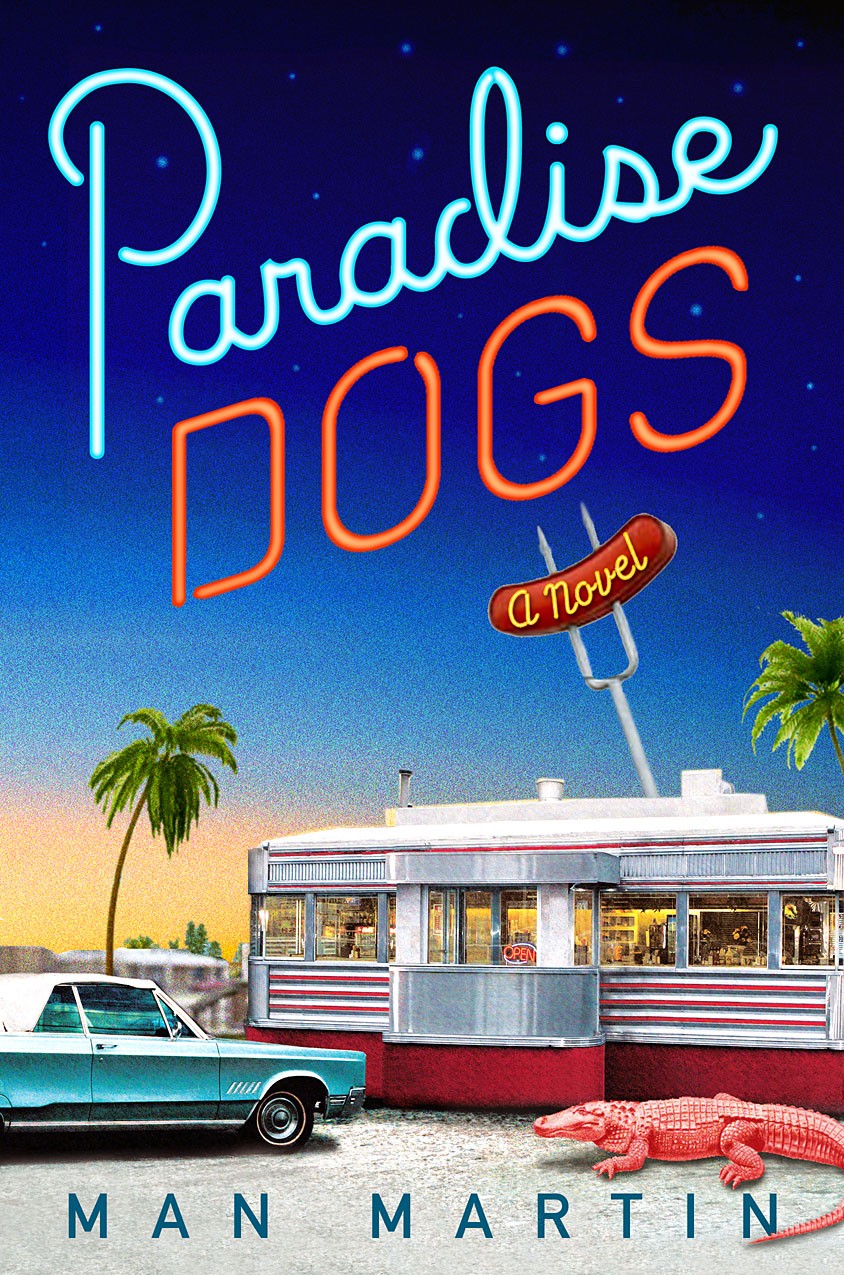
Next, I wanted to let readers know that one of my blog followers, Man Martin, has a new book released tomorrow that you can order today: Paradise Dogs.  Published by Thomas Dunne Books, the novel sounds absolutely hilarious and has already received great reviews from such prestigious reviewers as Publisher's Weekly, Kirkus, and Atlanta Magazine.  Congratulations, Man!  And what a super cover:
 
Last of all, I just heard from the organizer of the 2011 New Mexico Women Authors Book Festival in Santa Fe, and I've been invited back to present another workshop.  This year I'm scheduled for October 9th at 11.30 AM, and my topic will be "Book Trailers:  How and Why You Need One."  Right now I have two trailers you can view on my sidebar here, but by the time of the festival I will have released two more.  I'm very excited because not only is Santa Fe a wonderful place to visit, but the book festival is so much fun to attend.  And I'll be signing copies of my next novel, Overtaken, so in essence the festival will mark that book's big debut.

In the meantime, wishing you all a happy and productive week.  Congratulations again to our giveaway winners and to Man Martin.  Good job!

Tip of the Day:  Put those pens and paintbrushes down for a couple of hours.  It's summer, time to read and fill up the creative well with a good book (or several).  So everybody get to the bookstore, the library, your best friend's book shelf.  Run, don't walk!

Thursday, June 2, 2011

Awards, Prizes: Today is a Good Day!

Happy Thursday, and Happy Blog Giveaway Day!  First off, I'd like to thank everyone who took the time to leave a comment on Holly Schindler's guest post.  It was great to hear from you and I'm only sorry that I had to pick just two winners. 

Speaking of which, a few minutes ago I ran the list of commenters (that's a word, right?) through a great selection service:  Random.org and got back a new list putting the names in winning order.  The first two names will be contacted this afternoon and will have 48 hours to let me know their mailing addresses.  If I don't hear back in time, I'll go down to the next names on my list.  So until then, the names will still be kept a secret.  Stay tuned!  With any luck winners will be announced over the weekend.

In the meantime, I also wanted to let you know that I received a new blog award:  The Versatile Blogger, from Nomar Knight at knightchills.blogspot.com.  It's a fun award and here are the rules: 

1.  Thank and link to the person who nominated you.
2.  Share 7 random facts about yourself.
3.  Pass the award on to 5 new-found blogging buddies.
4.  Contact the winners to congratulate them.

So from the top:  Thank You, Nomar!  It was great to hear from you; much appreciated!  (Nomar's link is posted just above the "rules.")

7 Random Facts About Me (not selected by Random.org):

1.  I write morning pages, but I don't keep them.  After I've made note of any "instructions" I might have written to myself, I toss them out.
2.  I took violin lessons in junior high school and loved them.  Loved them!
3.  When I lived in Georgia it took me two hours to mow my lawn with a rider mower.  It was fun and meditative, and I used the time mowing to plot out my stories or think about my characters.
4.  I sweep my kitchen floor every night before I go to bed.  I do this in memory of one of my sweet little cats who loved to watch me sweep, then try to catch the broom.  (He's now gone to cat heaven along with his two senior citizen kitty pals.)
5.  I miss my cats terribly, but I've decided to remain pet-free.  Now my pet nurturing instincts go into supporting shelters and humane societies.  (Please take a minute to click on my sidebar link that helps feed homeless pets.  Thanks!) 
6.  I'm taking a new art class next week:  Experimental Drawing.  Can't wait.
7.  I don't like camping.  No, no, no.  Hotels and hot water and clean towels are my idea of a vacation.  Dirt in my toothbrush just makes me cry.

So that's me, randomly.

5 great blogs I've discovered in the last few months:

1. stephaniepellegrin.com
2. pennyjars.wordpress.com
3. waltzwithwords.blogspot.com
4. jodyhedlund.blogspot.com
5. nutpress.co.uk

Note:  wouldn't you know, with perfect irony, the lovely Kathryn Eastman of Blog #5, The Nut Press, has just posted about-- going camping.  But I'm sure camping in the UK is an entirely different experience than here in the Southwestern desert--I might even like it! 

So thank you, Bloggers, for inspiring me, and thanks again to Nomar Knight for giving me the award in the first place.

Tip of the Day:  Reading new blogs is always fun--and educational.  Please take the time to check out the six blogs mentioned in today's post.  I'm sure you'll enjoy your visit and will find plenty to inspire, motivate, and keep you on the creative path.  Enjoy!

Tuesday, May 24, 2011

Guest Author, Holly Schindler (and a Super Give-away!)


Today I'm giving a big welcome to Young Adult novelist, Holly Schindler--my first guest blogger!  Holly is the author of A Blue so Dark and the recent Playing Hurt.

My introduction to Holly and her books came through the children's writing network, Jacketflap.com.  A little later I found Holly at her web site, hollyschindler.com and at her blog, hollyschindler.blogspot.com.

Holly's books are are what I consider top-of-the-line young adult writing: a strong and realistic voice, sophisticated detail, unforgettable characters, and an authentic identification with her young readers.  In my opinion, it doesn't get much better than that!  Here's what Holly has on her book covers:


A BLUE SO DARK:
Fifteen-year-old Aura Ambrose has been hiding a secret. Her mother, a talented artist and art teacher, is slowly being consumed by schizophrenia, and Aura has been her sole caretaker ever since Aura’s dad left them. Convinced that “creative” equals crazy, Aura shuns her own artistic talent. But as her mother sinks deeper into the darkness of mental illness, the hunger for a creative outlet draws Aura toward the depths of her imagination. Just as desperation threatens to swallow her whole, Aura discovers that art, love, and family are profoundly linked—and together may offer an escape from her fears.


PLAYING HURT :
Star basketball player Chelsea “Nitro” Keyes had the promise of a full ride to college—and everyone’s admiration in her hometown. But everything changed senior year, when she took a horrible fall during a game. Now a metal plate holds her together and she feels like a stranger in her own family. 

As a graduation present, Chelsea’s dad springs for a three-week summer “boot camp” program at a northern Minnesota lake resort. There, she’s immediately drawn to her trainer, Clint, a nineteen-year-old ex-hockey player who’s haunted by his own traumatic past. As they grow close, Chelsea is torn between her feelings for Clint and her loyalty to her devoted boyfriend back home. Will an unexpected romance just end up causing Chelsea and Clint more pain—or finally heal their heartbreak?

I love these blurbs--they're wonderful examples of what I share in my workshops when I tell students "what you should be writing in your query letters!"  In just a few short lines we have character, plot, and a the promise of a huge emotional pay-off that  makes us want to know more, much more.

So how does Holly come up with all this good emotional content?  How about "Crying at the Movies"?

"I am one ugly crier. Some women—I’m thinking of actresses on the soaps, especially, who seem to be able to turn on the waterworks anytime they want—can look pretty while the tears roll down their cheeks. Me? My lips turn red, and I puff up like I’m having an allergic reaction.  I really hate crying at the movies for just that reason. And I usually hold it back. But I’ve had plenty of times that I felt myself tearing up, or feeling a tear break forth despite my best efforts to hold it in.  And I think that makes me a better writer. 

Both of my published YAs—A BLUE SO DARK and PLAYING HURT—feature characters whose experiences are completely unlike my own. In BLUE, I’ve got a protagonist with a schizophrenic mother who fears that she is mentally unstable, too. In PLAYING HURT, I’ve got a couple of former athletes…and dual protagonists, one of which is a man.  Talk about different. I couldn’t play a decent game of basketball to save my life. Yet, the opening scene of PLAYING HURT involves a basketball game. 

In order to pull it off—to make situations I have never lived seem real—I have to have extraordinary empathy for my characters. Their pain, their triumphs have to be my own.  I have to chuckle when they tell jokes, I have to feel my heart race when they’re in trouble, and, yes, I have to tear up when they encounter tragedy.  

If you’re a crier—if you sniff at Hallmark commercials, or cry out in victory when the winner of Top Chef is named—you’ve already got a leg up on the competition. If you can empathize, you can be a great writer."

Thanks, Holly--much appreciated!  And in appreciation of our readers, Holly has generously provided a book give-away:  a signed copy of Playing Hurt.  For our first lucky winner, I'm going to add a copy of my how-to-write book, The Essential Guide for New Writers, From Idea to Finished Manuscript.  A second name chosen will receive a copy of The Essential Guide plus a signed bookplate and bookmark from Holly.  To be eligible for the drawing, all you have to do is leave a comment on this post today or sometime during the next week before midnight, June 1, 2011 (6/1/11, 12.00 AM).

Tip of the Day:  Thanks again to Holly, we have some special writing advice on video.  Enjoy, and don't forget to leave a comment!