Showing posts with label Writer's Group. Show all posts

Tuesday, May 27, 2025

Freewriting on a Sunday (or Any Day You Can!)

Albuquerque Morning; watercolor crayons and indigo ink

It's Sunday morning and I'm doing my best to recreate an earlier life: walk to the museum, buy coffee, write to a prompt.

Once I sit down, the background noise holds a familiarity that is good to write to: the coffee machine hisses, children run around the lobby, people stand in line and can't make up their minds what to order: quiche or a chocolate croissant? The cafe tables, as always, are unbalanced, their legs too short on one side and the floor is tiled. The only difference between then and now is I am alone; my writer's group disbanded long ago. And that's okay--writing is a solitary activity and I've learned to be comfortable with solitude.

And just like in the past, I've got a handful of prompts: magazine photos and snippets of text. What to choose? I place everything face-down on the table and pick a few at random before turning them over and surprising myself with the myriad of possibilities. I set the time (how about forty minutes?) and I begin . . . flash fiction, essay, poetry, new chapter for a work-in-progress . . . ?

Whatever I end up writing, though, isn't half as important as the fact I showed up. I did what I set out to do. And that's the beauty of freewriting: taking the time, making the effort, and being perpetually surprised at how much I can write even when I don't really want to.

I can't say enough about freewriting. Ever since I first read (and re-read) Natalie Goldberg's Writing Down the Bones and followed her advice on the topic I've been hooked. Here's why:

1. Freewriting is good for absolutely everything: short stories; novels; memoir; screenplays; poetry, even business correspondence. You can't go wrong with a "don't think, just write" first draft.

2. Breaking freewriting sessions (or anything else for that matter) into timed segments makes me far more productive than when I force myself into hours and hours of non-stop work--which never really works. Note: If you don't like the pressure of a time frame, going for several word- or page-count sessions is equally effective; 500 words per session or 3-5 pages are doable goals.

3. I love prompts. I've written about this before, my last post for National Poetry Month being one example. Prompts save time--no more thinking about what to write--and they don't have to be snipped from magazines or other printed materials. How about choosing an item from your handbag, or writing about a person, animal, object, or piece of artwork right in the area you're sitting?

4. Freewriting gives me a great sense of daily accomplishment. My favorite quote from Dorothy Parker is: "I hate writing, I love having written." While I'd never say I hate writing (because I don't), there are, of course days, I'm not particularly motivated, or I'm too preoccupied with some kind of boring energy drain (e.g., taxes) to sit down and write. Which are the very times that I need to sit down and write. So I do--even if it's only for fifteen minutes.

5. Freewriting has given me what I can only describe as an attitude of "joyful discipline." It's something I've learned to extend into a wide variety of creative pursuits, from gesture drawing and watercolor play to making memory-wire bracelets. Working with a dedicated focus inside a set time frame really boosts my energy and desire to create, and without making me feel the time spent is some kind of horrible homework assignment.

6. I get to use supplies, supplies, supplies! Freewriting by hand is essentially about mark-making, expressing how you feel or think at any given moment in the most honest way possible. To really get those feelings out, try using: giant sketchpads, glitter gel pens, exquisite fountain pens, fancy leather-bound journals, purple ink!

 7. Freewriting gets me out of the house. Writing in cafes, the park, and of course the art museum is more than inspiring, it's fun. Conversely, if you have to go somewhere, e.g., some dull appointment where you have to wait for hours before you're seen, freewriting can make the time go more quickly and enjoyably.

Tip of the Day: No prompt? No problem! Whenever you're stuck, tired, or can't lay your hands on a single magazine, you can always fall back on Natalie Goldberg's elegant go-to: I remember. Fifteen minutes, people--no excuses--keep those pens moving!


Thursday, April 27, 2023

Los Caminos de la Vida


The paths of life
are not what I used to hope
are not what I used to believe
are not what I used to imagine
 
The paths of life
are very hard to travel
they are hard to walk
and I can´t find a way out
https://lyricstranslate.com

Los Caminos de la Vida

The paths of life,

They are not what I used to think,

They are not what I used to imagine

They are not what I used to believe.

The paths of life,

They are very hard to walk,

They are very hard to travel,

And I can't find a way out. 


I hope I am not as desolate as these song lyrics imply, but I have to admit to feeling somewhat lost without my husband. Nothing in my past prepared me for the road of grief and loss; no one ever told me it would be so hard. But that doesn't mean I'm entirely without direction or hope, or that I can't "find a way out."

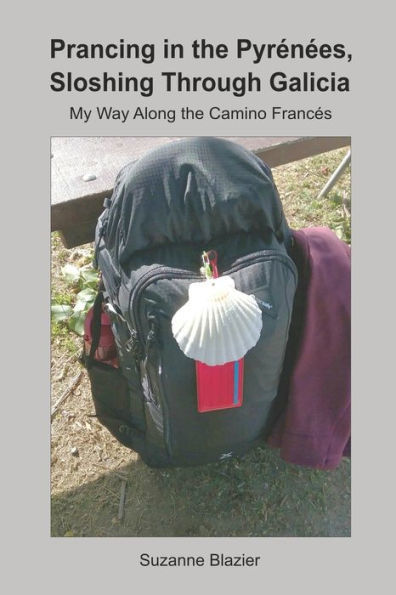
One of the things helping me to find a way both in- and outward has been my return to reading. Not being able to read during the initial stages of grief is apparently quite common, so finding myself once again enjoying a book has been a huge relief. At the top of my "that was so good!" list is a book recently published by my friend and former writing group member, Suzanne Blazier. In September of 2019, only months before we were all hit by the pandemic, Sue did something I had often dreamed of doing but never had the nerve to try: she walked the Camino Francés, the historic pilgrimage route from  St. John Pied-de-Port, France to Santiago de Campostela in Spain and then on to the Spanish coastal town of Finesterre. 

It was a very long trip. And far more difficult than I realized until I read the full manuscript. From nearly-impassable trails of sharp, jagged rocks to battling constant rain and catching a debilitating cold, it's a miracle Sue came home in one piece at all. Yet, regardless of her challenges (maybe because of them?), Sue managed to find a wealth of beauty and meaning along the way, moments she made time to write about in her insightful journal that eventually became Prancing in the Pyrénées, Sloshing Through Galicia; My Way Along the Camino Francés.

I don't want to give away too much of the story, because I hope you will read Prancing in the Pyrénées for yourself, but I do want to say how much I love this book, and for reasons that have nothing to do with me ever walking the Camino. 

The first time Sue's story inspired me was while her book was still in manuscript form. It was smack in the middle of the pandemic restrictions. All of my writing and art groups had closed down and the only activity open to me was endless walking, something I mentioned in my last post on Urban Writing. Back then I suppose we were each in a separate state of shock, unsure of what was really going on. My "therapy" was to walk every day. Each morning when I would embark upon my solitary and lonely walks, I would imagine I was on the Camino, making a pilgrimage of some sort to understand what on earth was happening. Some days I would walk thinking of how the world could heal itself; other days I would walk in an attempt to figure out what I meant by "healing." Thinking of Sue's trip gave me a reason to walk beyond mere exercise.

Now that the pandemic is over and the manuscript draft is an actual hold-in-your-hands book, Sue's story continues to inspire me. I keep turning over what Sue achieved, thinking of how she did it and how to use the same motivations that kept her going forward. Chapter headings such as "Solitude," "Where are you from?" and "Re-entry" have made me think of how I, as well as other readers, could use these titles as journaling or writing prompts in our own lives. Some ideas that came to mind were:

1. Write a travel memoir of your own. This might seem a bit obvious, but if you focus on trips that were more than "just for fun," what significant journeys have you taken that were deeper than rest and relaxation? How were you changed by travel?

2. What do you need to travel with? What can you leave behind? Besides being an entertaining read, Prancing in the Pyrénées definitely has its practical side. Advice on topics from language skills to what items to bring or leave at home are invaluable tips for anyone seriously planning a Camino pilgrimage. As a dedicated minimalist, I was impressed with Sue's pared-down list of travel items, from clothing to toiletries. There are so many areas in our lives in which we carry too much: shelves of unused art supplies; books on a TBR pile that will never be read; photographs of distant events that mean little or nothing to us. What do we really need to carry, not just for survival, but to be happy?

3. Many years ago when I was still thinking about what it was I most wanted to write, I took take a class on travel writing. At the beginning of the class the instructor explained the origins of the word "travel," saying that it came  from the Old French word "travail" which in turn was a reference to weaving, describing the action of a shuttle carrying thread back and forth through other threads on a loom to create a piece of fabric. To my ears, "travail" was more closely related to "trouble" than travel, but I also have enough horror stories of my own to know how troublesome travel can be! In her book, Sue does an excellent job of sharing her travel-travails and how she overcame them, persevering to complete her trip in the best way possible. Have there been times in your life when you wanted to give up on a project, goal, or dream? What did you do to keep going? How did you encourage yourself? What roads or projects were you forced to abandon? Do you think of re-starting any them, and if so, how could you make that happen?

The Mexican poet and Nobel laureate, Octavio Paz, once wrote that reading is a pilgrimage. He believed that readers are forever changed by what they read, and in turn they cannot help but express that inner change to the world around them. I couldn't agree more. From Sue's book I've learned how vital it is to clear the road for those who follow, write the guidebooks for those need them, and to be as honest and open about our lives as we can be. Whether you plan to walk to Spain or sit reading in the sun with a cup of tea, Prancing in the Pyrénées will be the perfect travel companion.

Tip of the Day: As an additional resource, Sue has also created a blank Camino Journal for pilgrims to take notes and record their days. Although the book is designed for travelers, you might want to think about using it to journal from the prompts I've listed above. Use it to brainstorm your most memorable paths and journeys. What could you write about them? What did you bring home to share?

While you're writing, here is Los Caminos de la Vida in its entirety. It's a sad song, but like so much of life, strangely filled with comfort despite the darkness. That said, may your path be always safe and sure.

Tuesday, June 11, 2019

How to Be Your Own Writer's Group

Photo © Creative Commons Zero (CCO)

After fifteen years, my writer's group has called it a day. The reasons are many: extensive travel plans; classes and life changes; projects and deadlines to meet. We just don't have the time any more for freewriting together on a bi-weekly basis. But that doesn't mean I'm going to abandon my own personal schedule of artist's dates and making time to sit down, slow down, and check-in with myself. (How's it going, Valerie? Well, I managed to revise twenty pages of Ghazal and three sketches on my picture book this week. Really? Great! Have a latte.)

It's going to be different, no two ways about it, but I've come up with a plan to ensure I still have a creative life beyond my desk or art table:
  • Keep writing in cafes. I've always loved drinking a cup of tea or coffee while I scribbled in a spiral-bound notebook surrounded by a crowd of noisy strangers. The more chaotic the atmosphere, the better the writing seems to be! Although I'm no longer in a group, I still want to have cafe time to a) journal on my writing progress, b) create my synopses, query letters, and book descriptions, and c) work on a new project/challenge I'll be announcing in a couple of weeks!
  • Watch YouTube.com videos on art and writing. Instead of watching the usual TV programs, I can set aside a dedicated half hour or so to learn a new creative technique or listen to an inspiring talk.
  • Enroll in an online class. There are so many to choose from! I may not do this for a little while, but it might be fun for say, Inktober (an ink drawing a day challenge in October) to take an illustration class. Interacting with the teacher and other students might prove to be the most valuable part of the course.
  • New supplies. There's nothing like a trip to the office supply or art store at least once a month. Gel pens, sketchbooks, brushes, color pencils . . . shopping for supplies is always the perfect artist date.
  • Buy a new prompt or how-to book or magazine once a month (or so). Bookstores, yay! Need I say more?
  • Cut out magazine photos, and rather than create new stories from the pictures, see if I can use them as reference photos to illustrate my WIP. Although Ghazal is a literary novel for adults, I enjoy designing illustrations to go with the plot. So far these have only been rough sketches, but I'd like to go deeper and create some solid artwork. And who knows? I might end up having an illustrated novel after all--a whole new genre!
  • Pick a non-cafe writing spot to use on a regular basis. For most of our meetings as a group we needed to find a place that was good for everyone with good parking, wasn't too noisy (not many people share my ability to shut out distraction), and that provided privacy for reading our work aloud. Now that it's just me, I might go to a park, a business center, or a hotel lobby, places that might not welcome a group but are fine with a lone visitor. 
  • Use social media to connect to other writers. I've been so busy with my book these last few months that I've let my tweeting and even my blogging slide a bit. Thinking up tips and motivations for fellow writers and artists is a great way to connect online without resorting to tweets such as: "I had a sandwich for lunch." (I still do that, but I do try to justify it by sharing a vegetarian sandwich ingredient or recipe others might like to try!)
I was lucky to have my group for so long, and the one thing that won't change is our friendship. We still plan to have lunch, visit galleries, and have some non-writing adventures together. In the meantime: happy trails, all. Thanks for hanging in there. 

Tip of the Day:  For most of my writing life, I've gravitated toward writing groups. The same with art. But now it's time to think outside of the box and explore something new: groups that focus on travel, beading, reading--they're all out there. But until then, I've got a book to finish . . . a never-ending book . . . Hello, manuscript. Have another latte.

Tuesday, May 21, 2019

Urban Sketch Group Wish List

Urban Twilight, Brush pen and watercolor.

I've been an urban sketcher for about four years now. During that time I've learned a lot about drawing and about myself, e.g., perspective will always be a problem; I can't be outdoors for five minutes without a sweater; I can sketch in public (really surprised myself with that one!); and most of all, I love to sketch. From pencils to brush pens, I'm a fan. The one thing that's eluded me though is finding a good sketch group, one that equates to my writer's group and keeps me motivated.

One of the challenges I've encountered when trying to create a sketch group is that a lot of the artists I meet are actually plein air painters rather than sketchy-sketchers. They thrive on lengthy, silent, meditative solitude, going their own way and able to ignore bug bites, sunstroke, and dirt in their paint. Urban sketchers like me, on the other hand, need, well, an urban environment: strong architecture, lots of people, and most of all, speed: "Let's draw fast!"

The other day I was trying to figure out how to solve this dilemma. In the end, I decided to simply write down my wish list and see what comes of it. As they say, "Write it down, make it happen!"

SKETCH GROUP WISH LIST 

1. Dedicated meeting time as a group, as opposed to everyone gathering at a specific place and then scattering to sketch solo. Two hours is a good length of time for a group meeting, especially if that time is divided into segments, say, using the first half hour to discuss a specific technique, tool, medium, or subject matter, followed by an hour to draw, and then taking the last thirty minutes to share and discuss work. 

2. To save time deciding what to draw, I think it would be fun for a group to occasionally draw the same pre-selected subject or scene together, or at least work from a shared theme such as doors or windows.

3. Taking this a step further, how about meetings where we all use the same medium or tools? For instance, a meeting where we only use brush pens, or just graphite. Or we choose a specific challenges, like drawing in only two colors, or drawing in a continuous line and not taking your pen from the paper. 

4. I love timed sketches and they're especially fun to do as a group. Three minutes, ten minutes, thirty minutes--set a timer and draw fast! 

5. Maybe it's just me, but I think urban means urban and rarely, if ever, means going out to explore the wilderness. Not that I have anything against the great outdoors, but it just isn't my thing for artwork. That said, neither does urban mean downtown. There are hundreds of interesting, complex places to sketch that have nothing to do with grand office buildings and busy intersections. How about sketching apartment complexes, schools and playgrounds, construction sites, museums, art galleries, industrial parks, or simply the street you live on? I often think a lot of well-designed and interesting architecture is overlooked just because it's too close to home. 

6. Lastly: LET'S WRITE! Sketches can be greatly enhanced by writing, whether it's to record thoughts and feelings about a place as a journal entry, or to experiment with some poetry or flash fiction inspired by your drawing.

So those are my ideas. How about you? Anything you can add to my list? All suggestions will be most welcome!

Tip of the Day: Finding a group of any kind to work with isn't always easy, and most creative people usually have to learn at some stage to enjoy their own company and work on their own. One of the best ways I know to combat any feelings of isolation or loneliness on the creative path is to watch art videos on YouTube.com. There are hundreds (thousands) of excellent workshops, demonstrations, and on-going conversations with artists at all levels. Two of my favorites are Brushes and Bunnies and Sketch with Teoh. Check them out the next time you need some inspiration as well as a new art buddy.

Monday, October 23, 2017

Short Stories or Novels?


Short stories or novels? Which are best to write? Which are best and/or easiest for beginning writers? I've thought about these questions ever since I took my first writing class way back in Mission Viejo, California. As a new writer, I was drawn to the immediacy (and abbreviated length) of short stories, but our class instructor had different ideas. She believed one-hundred-percent that new fiction writers should begin their careers with novels. Her advice worked well for me--I wrote two novels right off the bat and learned so much about writing I then went on to teach writing classes of my own.

Since then I've experimented with many kinds of writing: screenplays, poetry, nonfiction, and even short stories which I rarely, if ever, thought about submitting for publication. To me short stories were exercises in freewriting, practice pieces for fun and entertainment. However, that all changed this past July when I participated in Camp NaNoWriMo and decided to write a sequence of short stories in lieu of a novel. It was time well spent, allowing me to both create a body of work while also discovering some important reasons why some people (including me) might like to consider short story writing as a serious publishing path. For instance:
  • Regardless of your initial enthusiasm for writing a novel, there eventually comes a day when the writing feels like more of a chore than a joy. One of the most difficult challenges for any writer is to muster the courage, strength, and willpower to stick with a book-length manuscript. Short stories are an excellent pick-me-up to provide some diversion and a fresh approach during the dark nights of novel-writing.
  • Writing a novel is a long-term relationship. Short stories are more like speed dating: Meet, write, move on! At best you might meet the story of a lifetime. And if you don't, well, it's all good life-experience.
  • With short stories, your time frame and cast of characters is much smaller than that of a novel, making everything much easier to keep track of. If your story starts out with a 36-year-old archaeologist working on a Saturday morning, chances are even if she quits her job she'll still be the same age when your story ends in the afternoon.
  • How often have you heard not to start your novel with too much information or back story? But with a short story, the back story IS the story! Tip: That juicy stuff you have to leave out of your novel? Turn it into short stories, the more the merrier.
  • For creative types who love starting projects but have trouble with completion, writing a short story a day or a week provides an endless wealth of new beginnings. Every writing session allows for a fresh start, a clean slate, and a chance to explore and experiment with voice, style, and subject matter.
  • Best of all, finishing a short story provides a wonderful sense of achievement and accomplishment. You did it!
  • And if by some terrible chance you don't like what you're writing or have written: End it. Toss it. Write the next one!
  • You can write short fiction on the go. Wherever you are: at work, on vacation, waiting in the car or for an appointment, you can write and finish a short story. And they're easier than ever to submit and publish thanks to the Internet.
November's NaNoWriMo (National Novel Writing Month) is just around the corner. If you're thinking of signing up, here's a suggestion: How about bending the rules a bit and rather than going for the traditional novel, set a goal of writing 30 (one a day) short stories? Ray Bradbury famously said that writing a story a week for a year would give you 52, and out of 52 at least one of them had to be good. Same out of 30, I'd say!

Tip of the Day: In many ways short stories are the equivalent of poetry: succinct, metaphoric, and intended to leave a powerful impression. The best way to understand what goes into them is to read as many as you can. Your local library will have numerous anthologies categorized by individual author as well as genre. I've always been a big fan of the Ellen Datlow editions of horror stories--just right for Halloween!